

Shelby Township Dentist » Services » Restorative Dentistry » Dental Bridges
Dental Bridges in Shelby Township, MI
Fixed Bridge and Implant Bridge Options Serving Shelby Township, Macomb, Clinton Township, and Sterling Heights, MI
A dental bridge replaces one or more missing teeth by anchoring a false tooth to the teeth or implants on either side of the gap. A traditional bridge lasts 10 to 15 years. McKinley-Holloway Legacy Dentistry in Shelby Township mills bridge crowns in-office. Call (586) 685-0880 to see which option fits.
A gap is not just cosmetic. The teeth beside it drift, the tooth above it drops down, and the jawbone underneath starts to resorb within the first year. Whether a bridge or an implant is the better answer depends on what is next to the gap, and that takes about fifteen minutes to determine. Call (586) 685-0880 or book a consultation about your missing tooth.
Why Choose McKinley-Holloway Legacy Dentistry for Dental Bridges?
Bridge Crowns Milled in Our Own Office
The crowns that make up your bridge are designed and milled on our in-office ceramic mill rather than shipped to an outside lab. That means fewer appointments, less time in a temporary, and shade matching done with your actual teeth in front of us instead of from a photograph.
Digital Impressions, No Putty Tray
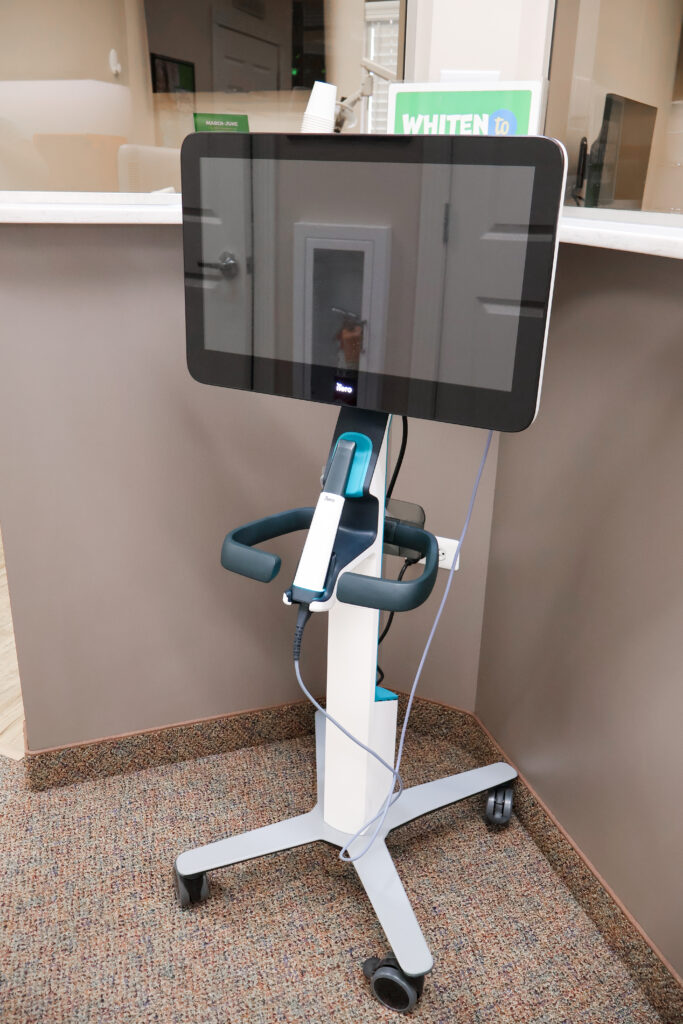
Bridges are built from an impression of the teeth on either side of the gap, and precision there decides whether the finished bridge seats correctly. We take that impression with an iTero intraoral scanner, which builds a 3D model in minutes with nothing to gag on and no putty to bite into.
We Will Tell You If an Implant Is the Better Call
A bridge requires grinding down the healthy teeth on either side of the gap. That is a permanent trade, and it is not always the right one. Dr. Brittany McKinley-Holloway plans both options and tells you which your case actually points to. Patients rate the practice 4.9 stars across 400+ Google reviews.

What Is a Dental Bridge?
A dental bridge, sometimes called a tooth bridge, is a fixed restoration that replaces one or more missing teeth. It consists of a false tooth, called a pontic, held in place by crowns cemented onto the natural teeth or implants on either side of the gap, which are called abutments.
Unlike a partial denture, a bridge does not come out. It is cemented in place and you clean around it the way you clean natural teeth, with the exception of flossing underneath the pontic, which needs a floss threader or a water flosser.
The trade-off is what happens to the anchor teeth. To hold the crowns, the teeth on either side of the gap have to be reduced, meaning enamel is permanently removed. If those teeth already have large fillings or crowns, that is no real loss. If they are perfectly healthy, it is worth asking whether an implant would leave them alone.
A bridge is usually finished in two visits, and it is the faster and less expensive option compared to an implant. See dental implants in Shelby Township for the comparison.
What Types of Tooth Bridge Options Are There?
There are 4 main types of dental bridges: a traditional fixed bridge anchored by crowns on both sides, a cantilever bridge anchored on one side, a Maryland bridge bonded to the backs of adjacent teeth, and an implant bridge supported by implants rather than natural teeth. Which one fits depends on the teeth around the gap, and we walk through the options at your consultation.
Traditional fixed bridge. The most common type of tooth bridge. A crown on each side of the gap holds the false tooth between them. Used when the teeth on both sides are healthy enough to serve as anchors.
Cantilever bridge. Anchored on one side only, used when there is a natural tooth on just one side of the gap. Less common, because the single anchor carries more force.
Maryland bridge. The false tooth has metal or porcelain wings bonded to the backs of the neighboring teeth. It requires almost no enamel removal, which makes it a conservative option, usually for front teeth where the bite force is lower.
Implant bridge. An implant bridge is supported by dental implants rather than natural teeth. This is the option when several teeth in a row are missing or when the neighboring teeth are not strong enough to anchor a traditional bridge. It does not require touching any natural tooth. See dental implants.
When a Dental Bridge Makes Sense
- One missing tooth with healthy teeth on both sides of the gap, the usual case for a fixed bridge
- Two or three missing teeth in a row, where an implant bridge often fits better than a tooth bridge
- Neighboring teeth that already need crowns anyway
- Not enough jawbone for an implant, and grafting is not an option you want
- A missing tooth that is causing others to drift or tilt
- A partial denture you are tired of taking in and out
- A front tooth gap where a more conservative option would work
- A medical reason that rules out implant surgery
Is a Dental Bridge or an Implant Better?
An implant lasts 20 years or longer and preserves jawbone but costs more and takes 3 to 6 months. A dental bridge lasts 10 to 15 years, is finished in about 2 weeks, and costs less, but requires reducing the healthy teeth on either side.
The honest version is that it depends on what is next to the gap. If the neighboring teeth already have large fillings or failing crowns, a bridge does double duty and the trade costs you nothing. If they are pristine, grinding them down to hold a bridge is a real loss.
Timeline matters too. A bridge is done in about two weeks. An implant needs three to six months for the bone to fuse before the final crown goes on. If you have an event, a job change, or a reason you need this finished, that difference is not trivial.
Bone is the argument for implants. A bridge sits above the gum and does nothing for the bone underneath the missing tooth, which continues to resorb. An implant loads that bone when you chew.
Dr. McKinley-Holloway plans both and tells you which your case points to. Sometimes it is the bridge, and we say so.
4.9 stars, 400+ Google reviews
What Is the Process for Getting a Dental Bridge?
Getting a dental bridge takes 2 visits over about 2 weeks. The first visit prepares the anchor teeth and takes a digital impression. The second seats the finished bridge. A temporary bridge protects the prepared teeth in between.
Visit 1: Preparation and scan. The anchor teeth are numbed and reshaped to receive crowns. We take an iTero digital scan of the prepared teeth and the bite, then fit a temporary bridge.
Between visits. Your permanent bridge is fabricated. Crowns produced on our in-office ceramic mill can shorten this considerably depending on the case.
Visit 2: Fitting and cementing. We check the fit, the bite, and the shade, adjust as needed, and cement the bridge in place.
Numbing is delivered with The Wand, and laughing gas or oral conscious sedation is available if you want it. See sedation dentistry.

How Much Does a Dental Bridge Cost in Shelby Township, MI?
A traditional 3 unit dental bridge in the Shelby Township, Macomb, MI, Clinton Township, and Sterling Heights area generally runs about $2,500 to $5,000, covering the false tooth and two anchor crowns. Implant bridges cost more.
Cost scales with the number of units and the material, with all-porcelain running higher than porcelain fused to metal.
Insurance covers bridges more reliably than implants, often at 50 percent after deductible. We verify your plan first.
Without insurance, the Smile+ in-house dental plan takes 15 percent off most restorative treatment, starting at roughly $41 a month. CareCredit, Cherry, and LendingClub are available through our dental financing options.
Do You Place Dental Bridges for Patients From Macomb, Clinton Township, and Sterling Heights?
Yes. McKinley-Holloway Legacy Dentistry is at 45665 Village Blvd in Shelby Township, MI, and places dental bridges for patients from Macomb, MI, Clinton Township, Sterling Heights, Washington Township, Utica, and Harrison Township.
A bridge is a two-visit treatment, so the drive is manageable even from the farther end of the service area. Patients coming for a dental bridge from Clinton Township, Macomb, MI, or Sterling Heights are generally 15 to 20 minutes out, and we open at 7 AM on Tuesdays and Wednesdays.
Bridges sit within our broader restorative dentistry services, alongside dental crowns, dentures and partial dentures, and full mouth restoration.

Bridge or Implant? Find Out in One Visit
Dental bridges at McKinley-Holloway Legacy Dentistry are built from digital scans with crowns milled in our own office, and planned by a dentist who will tell you when an implant is the better call. We are rated 4.9 stars across 400+ Google reviews and treat patients from Shelby Township, Macomb, MI, Clinton Township, Sterling Heights, Washington Township, Utica, and Harrison Township.
Call (586) 685-0880 or book a consultation about your missing tooth.

Dental Bridge FAQs
A dental bridge is a fixed restoration that replaces one or more missing teeth. A false tooth, called a pontic, is held in place by crowns cemented onto the natural teeth or implants on either side of the gap. Unlike a partial denture, a bridge does not come out, and you clean around it much like natural teeth.
A traditional dental bridge lasts 10 to 15 years with good care, and many last longer. What ends a bridge is usually not the bridge itself but decay or gum disease affecting the anchor teeth underneath it. Flossing under the pontic with a threader or water flosser is the single most important habit for making one last.
A traditional three unit bridge in the Shelby Township, Macomb, Clinton Township, and Sterling Heights area generally runs about $2,500 to $5,000, covering the false tooth and the two anchor crowns. Larger bridges and implant-supported bridges cost more. Dental insurance typically covers bridges at around 50 percent after deductible, more reliably than it covers implants.
It depends on the teeth beside the gap. A bridge is faster, costs less, and finishes in about two weeks, but requires permanently reducing the healthy teeth on either side. An implant leaves them untouched, lasts 20 years or longer, and preserves jawbone, but costs more and takes three to six months. See dental implants.
An implant bridge, also called an implant-supported bridge, is anchored by dental implants rather than natural teeth. It is the usual answer when several teeth in a row are missing, or when the teeth beside the gap are not strong enough to carry a traditional bridge. Because implants do the anchoring, no natural tooth has to be reduced.
Preparing the anchor teeth is done under local anesthetic, so you should not feel it. We use The Wand, a computer-controlled system that delivers numbing medication slowly and removes the sting of the injection. Some sensitivity in the prepared teeth for a few days afterward is normal. Laughing gas and oral conscious sedation are available.
Brush normally, and clean under the pontic daily with a floss threader, superfloss, or a water flosser. This is the step that determines how long the bridge lasts, because plaque trapped under the false tooth attacks the anchor teeth and gums. We will show you the technique when the bridge is seated.
Yes. When a bridge reaches the end of its life, it is removed and the anchor teeth are evaluated. If they are still healthy, a new bridge goes on. If decay or gum disease has compromised them, we look at implants instead. This is a common conversation for patients whose first bridge was placed 15 or 20 years ago.
The teeth next to the gap drift toward it and the tooth above or below it drops into the space, which changes your bite and makes both teeth harder to clean. The jawbone under the gap also begins to resorb within the first year. Waiting can turn a straightforward bridge into a more complicated case.